
Water in a crawl space is easy to miss and expensive to ignore. It keeps floor framing damp, raises humidity in the rooms above, and can lead to mold and wood rot. Here is how to spot the problem and how crawl space water removal works.
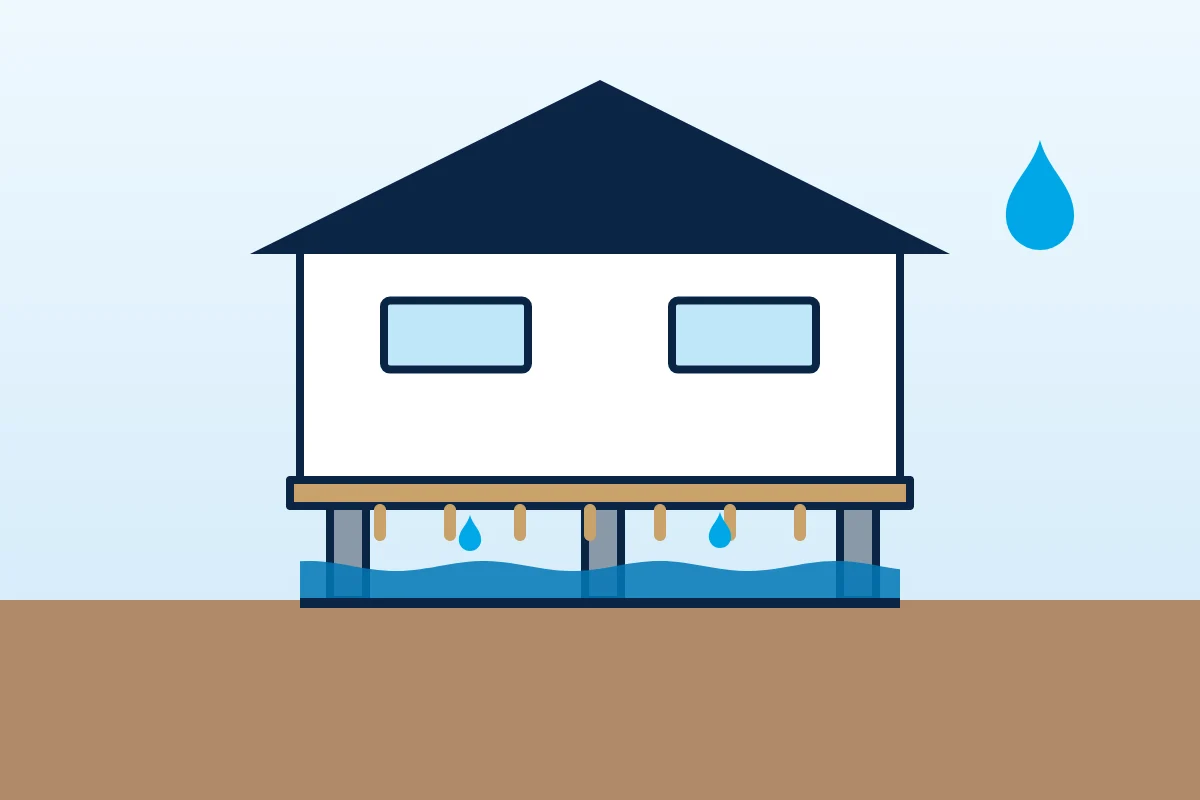
Signs of water in your crawl space
- A musty smell on the ground floor or in closets
- Hardwood floors that cup, buckle or feel damp
- Floors that feel soft or sag
- Condensation on windows or unusually high indoor humidity
- Insulation hanging down from the floor joists
- More insects or rodents than usual
Where the water comes from
- Groundwater and runoff: snowmelt and heavy rain saturate the soil around the foundation.
- Poor drainage: gutters, downspouts and grading that send water toward the house.
- Plumbing leaks: supply and drain lines under the house can leak for months unnoticed.
- Condensation: humid outdoor air entering vents and meeting cool surfaces.
How crawl space water removal works
- Pump-out: low-profile pumps remove standing water and mud.
- Removal of wet debris: soaked insulation and damaged vapor barrier are taken out.
- Drying: air movers and dehumidifiers sized for confined spaces dry the joists and subfloor.
- Treatment: framing is cleaned and treated where mold is present.
- Prevention: the contractor may recommend a new vapor barrier, drainage improvements, a sump pump or encapsulation to keep the space dry.
Why the cause matters
Pumping out the water solves today’s problem. If the source is drainage or groundwater, the water will return until that is fixed. Ask the contractor what is letting water in and what it would take to stop it. If water has also reached a lower level, see flooded basement water extraction.
Frequently asked questions
Can crawl space water cause structural damage?
Yes. Wood that stays damp can rot, and joists and beams lose strength over time. High moisture also attracts wood-damaging insects.
Will insurance pay for crawl space water removal?
A sudden plumbing failure is often covered. Slow leaks, groundwater seepage and long-term moisture are commonly excluded. Your insurer can confirm.
How long does a crawl space take to dry?
Pump-out usually takes hours. Drying soil, joists and subfloor commonly takes several days to a week.
Water in your Boulder home or business?
Boulder Water Extraction is a referral service being set up to connect Boulder, CO property owners with independent water damage professionals. We are not taking service requests yet.
Boulder Water Extraction is a referral service, not a contractor. Any work is performed by independent local contractors.
Water emergency in Boulder? See the steps to take right now.
What To Do Now