
Boulder, Colorado
Crawl Space Water Removal and Drying in Boulder
Crawl space water removal in Boulder starts with one phone call. Call (720) 615-8346 any hour for pumping and drying from a local pro. Water under the house is easy to miss, so here is how to spot it and what happens next.
Calls answered 24/7
Quick answer: Water in a crawl space rots wood and feeds mold where you cannot see it. It is pumped out, wet insulation is removed if needed, and the space is dried with fans and dehumidifiers. You also learn what let the water in. Call (720) 615-8346 for crawl space water removal in Boulder.
Water Under Your House? Start Here
Look, crawl spaces are easy to forget. Nobody wants to wriggle under the house with a flashlight. So water can sit down there for weeks before anyone notices.
Here is the thing about crawl space water removal in Boulder. The problem rarely stays under the floor. Damp framing raises humidity in the rooms above. Floors can cup. Closets can smell musty. Mold and wood rot can follow.
Now, you might be wondering who to call. Call (720) 615-8346. The line is answered day and night, and a local water extraction professional can be sent to your home.
If you think you have standing water, do not go in alone. A wet crawl space can hide live wiring, sharp debris, and mold. Tell the person on the phone what you see from the access hatch.
What You Can Count On When You Call
Calls to this number are answered 24 hours a day, 7 days a week. That includes holidays and the day after a big storm.
We cover Boulder and nearby towns, including Gunbarrel, Louisville, Lafayette, Superior, Erie, Niwot, and Longmont. Arrival time varies by the hour, the weather, and how many calls are ahead of yours.
We will not throw around made up review counts or fake years in business. That drives us a little crazy in this industry. If a company claims hundreds of jobs, ask how they know.
Before work starts, ask three plain questions. Who carries the insurance? How is the price set? How will drying be checked? As far as we know, Colorado does not license water restoration as its own trade. So look for insurance and training such as IICRC certification.
A good pro explains the plan in simple words. If you leave a call confused, that is a warning sign.
Crawl Space Water Removal Explained, Neighbor to Neighbor
Crawl space water removal means pumping out standing water and mud, removing soaked materials, and drying the framing. It is also called crawl space dewatering. Drying is the part people skip, and it matters most.
Most customers ask us the same thing. Will a crawl space dry out on its own? Sometimes the top layer does. But moisture stays in the soil, the joists, and the subfloor. Hidden damp spots can keep feeding mold.
Crawl space problems to watch for
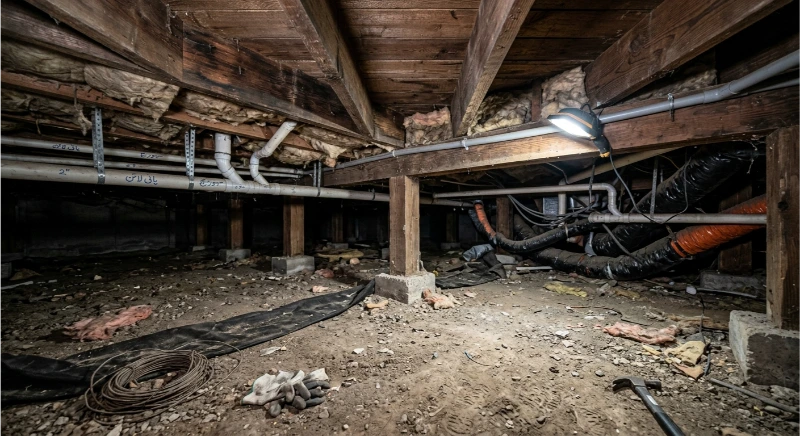
Common crawl space issues include standing water, wet insulation, a torn vapor barrier, and a musty smell. Crawl space moisture can also show up as condensation on pipes and ducts. Wet crawlspace conditions often start after heavy rain or fast snowmelt.
Standing water in a crawl space after heavy rain
This is common on the Front Range. Soaked soil pushes water toward the foundation. If grading, gutters, or downspouts send water toward the house, it can flow right in.
Who do I call for water in a crawl space?
Call for the water first. A cleanup crew pumps out the water and dries the space. Then a plumber, drainage contractor, or foundation specialist can fix the cause if needed.
Some jobs are more complicated than they sound. Tight access, deep mud, and low clearance slow things down. We cannot fix everything overnight, and honest crews say so.
What to look for
Signs of Crawl Space Water Problems
Safety and Mistakes to Avoid
First, stay out if you see standing water and electrical wiring. Water and electricity do not mix. If you are unsure, call an electrician or Xcel Energy.
Second, do not seal the space up tight and walk away. Trapped moisture makes mold worse. Third, do not just run a household fan and hope. A crawl space needs proper drying equipment.
Another mistake is ignoring the cause. Pumping the water out helps today. If the source is not fixed, the water comes back. A plumber should check the lines if you suspect a leak.
Take photos before anything is moved. Your insurer will want them. See our insurance claim guide for what to keep.
What to look for
Where the Water Comes from
Groundwater and Runoff
Snowmelt and heavy rain saturate the soil around the foundation.
Poor Drainage
Gutters, downspouts and grading that send water toward the house.
Plumbing Leaks
Supply and drain lines under the house can leak for months unnoticed.
Condensation
Humid outdoor air entering vents and meeting cool surfaces.
How Crawl Space Water Removal Usually Goes
Usually the crew starts with safety and a look around. They check access, wiring, and how deep the water is. It varies, but most jobs follow this order.
First comes pumping out standing water with low profile pumps. Next, wet debris is removed. Soaked insulation and a damaged vapor barrier often come out.
Then moisture meters show how wet the framing and soil are. Air movers and dehumidifiers dry the joists and subfloor. Drying usually takes several days.
If mold is present, framing may be cleaned and treated. The last step is a talk about prevention. That might include drainage fixes, a new vapor barrier, a sump pump, or encapsulation. Sometimes the plan changes mid job. That is normal. See our process page and structural drying page.
How it works
How Crawl Space Water Removal Works
Pump-out
Low-profile pumps remove standing water and mud.
Removal of Wet Debris
Soaked insulation and damaged vapor barrier are taken out.
Drying
Air movers and dehumidifiers sized for confined spaces dry the joists and subfloor.
Treatment
Framing is cleaned and treated where mold is present.
Prevention
The contractor may recommend a new vapor barrier, drainage improvements, a sump pump or encapsulation to keep the space dry.
Equipment Used for Crawl Space Drying
Equipment varies by company, so ask what will be brought to your home. Here is what a solid crawl space job typically uses.
Low profile submersible pumps remove standing water and mud. Moisture meters check wood and soil. Air movers and dehumidifiers sized for tight spaces dry the framing. Some crews use HEPA air scrubbers when mold is present.
Lighting and protective gear matter too. Crawl spaces are dark and cramped. Crews wear coveralls, gloves, knee pads, and respirators.
None of this is magic. The tools only help if the crew checks readings and adjusts the setup. That daily check is what keeps the space from turning musty again.
What Happens If Crawl Space Water Sits
Mold can start within 24 to 48 hours on damp materials, according to the EPA. See mold after water damage for details.
Damp framing can rot over time. Floors can cup, buckle, or sag. Wet insulation falls and stops working. Pests like damp spaces too.
Air from a crawl space can rise into the living area. Musty air and mold spores can affect people with asthma or allergies. Moisture also strains heating and cooling bills.
Money matters as well. Acting early usually keeps repairs smaller. National guides often show a few hundred to a few thousand dollars for water removal and drying. Encapsulation or drainage work costs more. Your price depends on the area, the water, and drying time. Our cost guide explains what changes the bill.
Why it matters
Why the Cause Matters
Pumping out the water solves today’s problem. If the source is drainage or groundwater, the water will return until that is fixed. Ask the contractor what is letting water in and what it would take to stop it. If water has also reached a lower level, see flooded basement water extraction. If a sump pump stopped working, see sump pump failure cleanup.
Mold can start within
24 to 48 hours
Calls answered
24/7
How to Judge a Crawl Space Company
People often ask how to tell a good company from a bad one. Look for steady, honest answers instead of hype.
Ask for proof of insurance. Ask what is causing the water. Ask whether the price is an estimate or firm. Ask what moisture readings will be shared with you.
Be careful with anyone who pushes a big encapsulation job before checking the cause. Be careful with anyone who wants full payment first. And be careful with anyone who will not put the scope in writing.
A good crew documents the water, the removed materials, and the final readings. That record helps with an insurance claim.
Crawl Spaces in Boulder: What Local Homeowners Should Know
Boulder sits where the foothills meet the plains. Snowmelt and spring storms can raise groundwater around homes. Boulder Creek and other creeks add to the picture in low areas.
Much of the Front Range sits on clay soil. Clay holds water against foundations. Many older Boulder homes have crawl spaces rather than full basements. Older homes can also have older insulation and wiring.
Drainage matters. Check that gutters are clear and downspouts send water well away from the house. The ground should slope away from the foundation.
Radon is worth a mention. Much of Colorado has elevated radon levels, and crawl spaces can be a path for it. Ask a radon pro about testing if you are fixing the space.
If you plan major repairs, check with the City of Boulder Planning and Development Services about permits. If water reached the lowest level of the house, see flooded basement water extraction. If a pump failed, see sump pump failure cleanup.
Why Call for Crawl Space Water Removal Here
You get one phone number and a real answer, day or night. You are not filling out forms and waiting for a callback.
The help is local, so travel time stays short across Boulder and nearby towns. The focus is on getting water out quickly, then drying until the readings say it is done.
You also get straight talk. If the space can be dried in place, you hear that. If materials have to come out, you hear why. Real benefits are a faster response, a clear plan, and fewer surprises.
Need help right now? Call (720) 615-8346. For after hours calls, see emergency water removal.
Areas We Serve for Crawl Space Water Removal
Calls cover Boulder and nearby communities. Pick your area to learn more.
Central Boulder, North Boulder, South Boulder, East Boulder, and Gunbarrel.
Louisville, Lafayette, Superior, Erie, Niwot, and Longmont.
Travel limits depend on the hour and the weather. Closer areas are usually reached first. Ask for a time window when you call.
Crawl Space Water Removal FAQ in Boulder
Here are quick answers to the questions callers ask most.
Who do I call for water in a crawl space?
Call (720) 615-8346 for pumping and drying. The line is answered day and night. A plumber or drainage contractor can fix the cause.
Will a crawl space dry out on its own?
Not reliably. The top may dry, but moisture stays in soil and framing. Hidden dampness can lead to mold.
What causes standing water in a crawl space?
Common causes include heavy rain, snowmelt, poor drainage, and plumbing leaks. Condensation can add moisture too.
How do I remove moisture from a crawl space?
Remove standing water first. Then dry the framing with air movers and dehumidifiers. Fix the source so it does not return.
Is it safe to go into a wet crawl space?
Not always. Water can touch wiring. Mold and debris can be a risk. If you are unsure, stay out and call.
How long does crawl space drying take?
Pumping can take hours. Drying usually takes several days. It depends on how wet the soil and framing are.
How much does crawl space water removal cost?
It depends on the area, the water, and drying time. National guides often show a few hundred to a few thousand dollars. Ask for a written scope.
Does insurance cover crawl space water?
It depends on the cause. Sudden pipe bursts are often covered. Groundwater seepage and flood usually are not. Check your policy.
What are signs of crawl space problems?
Look for a musty smell, cupped floors, sagging floors, and high indoor humidity. Insulation hanging down is another clue.
Do I need encapsulation after crawl space water?
Not always. First find the cause. A new vapor barrier or drainage fix may be enough. Ask the contractor to explain why.
Guides
Related Guides
Sources
EPA, A Brief Guide to Mold, Moisture and Your Home. EPA, A Citizen’s Guide to Radon. City of Boulder Planning and Development Services. IICRC S500 water damage restoration standard.
Contact us