
Wet carpet holds far more water than it looks like. Most of it sits in the pad and against the subfloor, where towels and household vacuums cannot reach. Fast professional extraction is often the difference between saving a carpet and replacing it.
Can wet carpet be saved?
It depends on the type of water and how long the carpet has been wet.
- Clean water from a supply line, sink or water heater: carpet can often be saved if it is extracted and dried quickly.
- Used water from a washing machine or dishwasher: carpet may be saved, but the pad is often replaced.
- Sewage or outdoor floodwater: carpet and pad should be removed. See sewage backup cleanup.
How carpet water extraction works
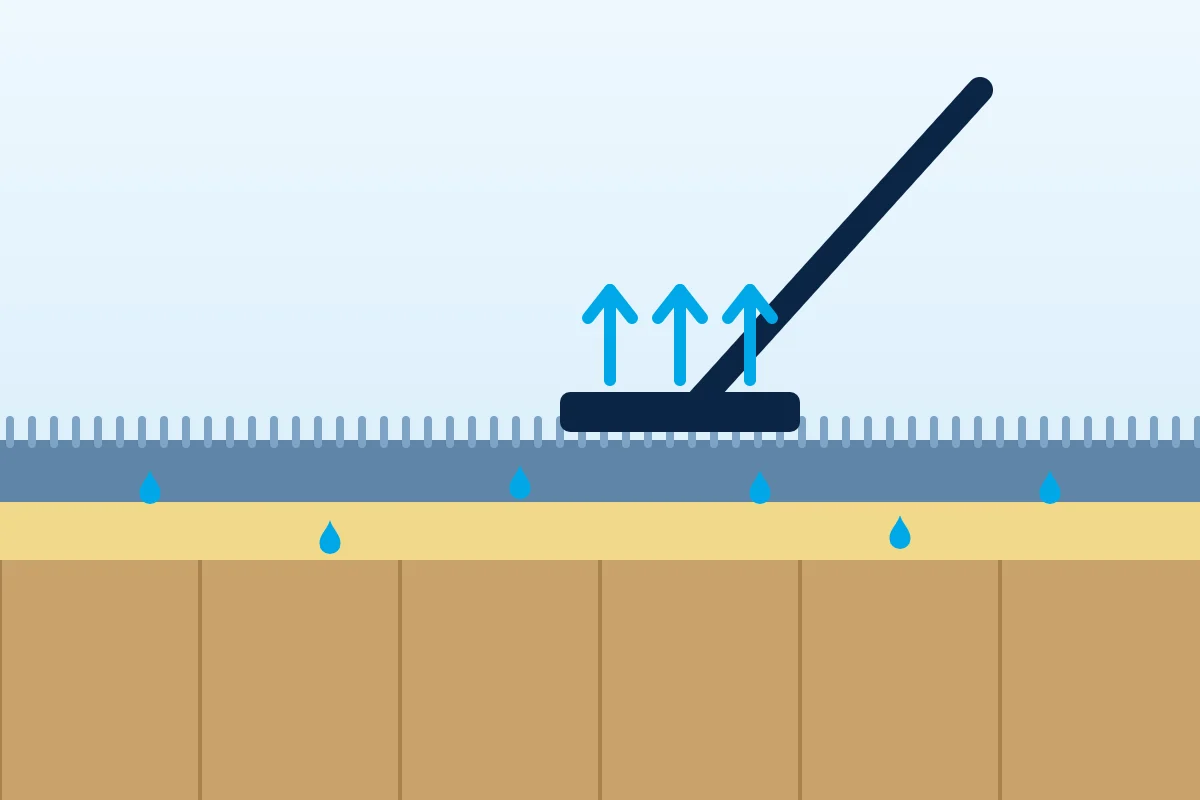
- Extraction: truck-mounted or portable extractors pull water from the carpet and pad. Weighted tools press water up out of the pad.
- Pad assessment: the contractor decides whether the pad can be dried in place or should be replaced. Pad is inexpensive, so replacing it and keeping the carpet is common.
- Drying: carpet may be lifted so air movers can dry it from underneath, with dehumidifiers pulling moisture from the room and subfloor.
- Cleaning and reinstallation: once dry, the carpet is cleaned, treated and stretched back into place.
What to do before help arrives
- Stop the water source and switch off power to the room if outlets or cords are wet.
- Put foil or plastic under furniture legs so stain and rust do not transfer to the carpet.
- Lift curtains and remove items sitting on the wet floor.
- Avoid walking on the wet carpet more than necessary.
- Do not use a household vacuum on wet carpet.
Why speed matters
Mold can begin to grow on damp materials within 24 to 48 hours. Long exposure to water also weakens the adhesive that holds the carpet backing together, which leads to rippling and separation. If the carpet got wet from a broken pipe, read about burst pipe water cleanup.
Frequently asked questions
Do I need to replace the carpet pad?
Not always. After a short exposure to clean water the pad can sometimes be dried in place. If it was wet for a long time or the water was not clean, replacing the pad is the safer choice.
How long does wet carpet take to dry?
With professional extraction and drying equipment, carpet often dries within a few days. Without extraction it can stay damp underneath for much longer.
Will the carpet smell afterwards?
Odor usually comes from moisture left in the pad or subfloor. Thorough extraction, complete drying and cleaning prevent it in most cases.
Water in your Boulder home or business?
Boulder Water Extraction is a referral service being set up to connect Boulder, CO property owners with independent water damage professionals. We are not taking service requests yet.
Boulder Water Extraction is a referral service, not a contractor. Any work is performed by independent local contractors.
Water emergency in Boulder? See the steps to take right now.
What To Do Now