
Boulder, Colorado
Water Damage Repair in Boulder: Process, Cost and Insurance
Water damage repair in Boulder, CO is three jobs in one. The water comes out, the structure is dried, and anything that cannot be saved is repaired. Call us any hour and your call goes to a local restoration professional. They inspect the damage and explain the price before work starts. This page explains the whole process and what it costs. It also covers what insurance usually pays and how to check any contractor before you hire one.
Calls answered 24/7
Last updated: November 2026
Quick answer: Water damage repair in Boulder usually goes in three stages. Water is removed, the structure is dried and checked with a meter, then damaged materials like drywall, flooring or trim are repaired. Small leaks may need only drying. Call (720) 615-8346 any hour to get a local pro started.
Wet Walls, Wet Floors and a Lot of Questions
Look, we get it. The water is off, the towels are soaked, and now you are staring at a stained wall wondering what comes next. Call a plumber? Your insurer? Someone with big fans?
Here’s the thing about water damage repair in Boulder, CO. It’s really three jobs. First the water comes out. Then everything dries. Then someone repairs what could not be saved. Skip a step and the problem comes back, usually as mold or a warped floor. If water is still standing, start with water removal in Boulder.
Boulder adds its own twists. Foothill snowmelt, hard freezes, older homes and a creek running through town all shape how water finds its way inside. Summer storms can dump a lot of rain fast, too.
This guide covers the full process, honest cost ranges, insurance basics and how to check anyone you hire. If water is still spreading right now, call +1 (720) 615-8346 first. The guide will still be here.
What You Can Count On When You Call
Let’s skip the hype. Boulder Water Extraction is a phone line, answered 24 hours a day, seven days a week. You describe what happened. Your call then goes to a local restoration professional who handles water damage repair in Boulder and nearby towns.
What does that mean for you? A few plain things. A real person answers. You explain the problem once. The professional who takes the job explains the scope and the price before work begins. Calling costs you nothing.
Coverage includes Boulder, Gunbarrel, Louisville, Lafayette, Superior, Erie, Niwot and Longmont. Not sure you are in range? Just ask on the call.
We also don’t invent numbers. No made up awards. No pretend review counts. Anything in this guide from outside sources, like the EPA, the City of Boulder and published cost guides, is listed at the bottom. You can check it yourself.
Our view is simple. You’re stressed, so the page should be useful, not flashy.
What Water Damage Repair Actually Includes
People say repair when they mean three different things. It helps to know which one you need.
Mitigation comes first
Mitigation is the emergency part. Pros stop further damage by removing standing water, setting up drying equipment and sometimes pulling out ruined materials. Water mitigation in Boulder, CO usually starts here. Insurers generally expect you to take reasonable steps to limit the damage, so this stage matters.
Drying is the part people skip
Drying takes several days. Moisture hides in drywall, framing and under flooring. Air movers and dehumidifiers pull it out, and moisture readings tell the crew when it’s done. Learn more about structural drying.
Repair is the rebuild
Repair comes last. New drywall, paint, flooring, trim. It starts after readings confirm everything is dry. Painting over damp drywall is a classic mistake. It looks fine for a month. Then the paint bubbles.
Cleanup covers the dirty part
Water damage cleanup in Boulder, CO includes sanitizing surfaces, discarding contaminated materials and controlling odor. Gray and black water need far more care than clean water. Sewage is a job for professionals, not a mop. See our sewage backup cleanup page.
Honestly, it drives us a little crazy when a price skips drying. If the line items jump from extraction to new drywall, ask why.
What To Do in the First Hour
Stop the source. Shut off the main water valve if a pipe or appliance is leaking. Know where it is before you need it.
Stay safe. Keep away from wet areas near outlets and panels. If the breaker box is dry to reach, you can cut power to the wet area. If not, call an electrician. Sewage or floodwater means stay out. Call 911 if anyone is in danger.
Call for help. Dial +1 (720) 615-8346. Say where the water is, where it came from if you know, when it started and your address.
Document everything. Take photos and short videos before you move anything. Keep every receipt. Your insurer will probably ask.
Start light cleanup. Mop up small amounts. Lift curtains off the floor. Put foil or plastic under furniture legs on wet carpet.
Don’t wait. The EPA advises drying wet materials within 24 to 48 hours to prevent mold. That’s the clock you’re racing.
The Water Damage Repair Process, Step by Step
Here’s how a job usually goes. It can vary, and bigger jobs add steps. Our process page shows the full picture.
1. Assessment
The pro finds the source and checks how far the water spread. They classify the water as clean, gray or black. A moisture meter, and often a thermal camera, finds hidden wet spots.
2. Extraction
Pumps and extractors remove standing water and water soaked into carpet, pad and floors. Do this early and less of the building gets wet.
3. Removing ruined materials
Soaked carpet pad, wet insulation and swollen drywall sometimes have to go. Nobody likes hearing that. But leaving soaked materials in place feeds mold.
4. Drying
Air movers and dehumidifiers run around the clock, typically for several days. The crew checks readings on each visit.
5. Cleaning
Surfaces get cleaned and treated. Gray and black water jobs need extra steps.
6. Repair
Once readings are back to normal, the rebuild starts. That might be a patch and paint, or a whole new floor.
Equipment Used in Water Damage Repair
Here’s the gear a qualified professional typically brings. It might seem small, but each piece solves a real problem.
Pumps and extractors. Submersible pumps move deep water. Truck mounted or portable extractors pull water out of carpet and pad.
Air movers. These fast fans push air across wet surfaces. Where they sit matters more than how many there are.
Dehumidifiers. Low grain refrigerant units pull moisture out of the air so wet materials can release what they hold.
Moisture meters and thermal cameras. A meter shows how wet drywall or wood really is. A thermal camera can help spot hidden wet areas. Crews keep checking until readings return to normal.
Air scrubbers and containment. On some jobs, pros use HEPA air scrubbers and plastic barriers. These keep dust and mold spores out of clean rooms.
What Happens If You Delay Repairs
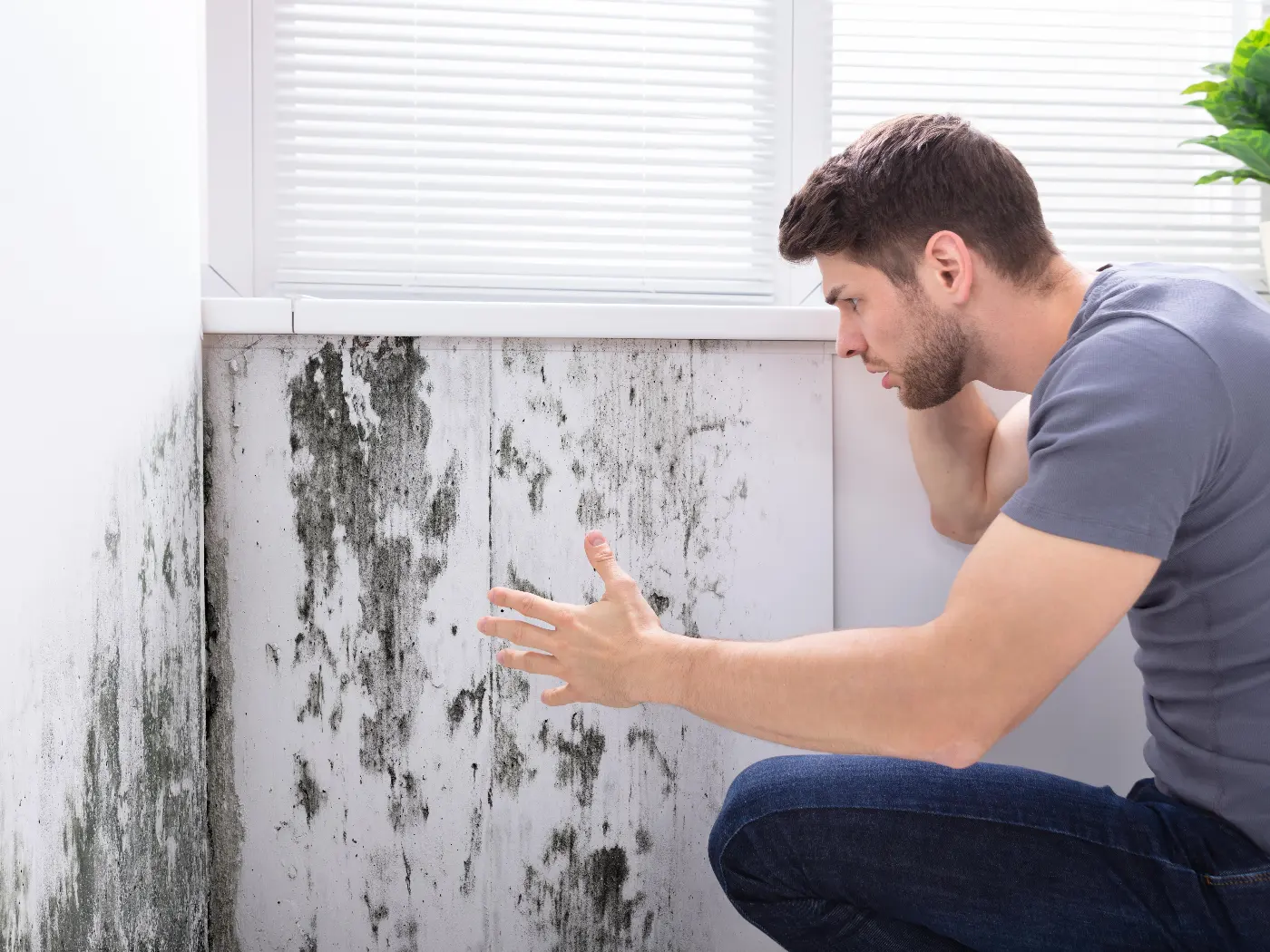
Mold can begin growing on damp materials within 24 to 48 hours, according to the EPA. Mold can irritate the eyes, nose and lungs, and people with asthma or allergies often notice it first. Read our mold after water damage guide for the timeline.
Your house suffers too. Drywall swells and crumbles. Hardwood can cup and buckle. Subfloors weaken. Wet insulation stops doing its job.
Then there’s the money. A small drying job can turn into a rebuild if it sits. Insurers can also push back when damage grows because a problem was left alone. Check your own policy for details.
Boulder’s seasons add pressure. A hard freeze can burst a pipe, and the real flood arrives at the thaw. Spring snowmelt can push water toward basements. Summer storms can overwhelm a drain in minutes. Fast action matters in every season.
Cost
What Does Water Damage Restoration Cost?
No honest price can be given before someone has seen the damage. What we can give you are the ranges national cost guides published in 2025 and 2026. They help you tell whether a quote is in the normal range. They are US figures, not Boulder quotes. Three things move the price most: how much is wet, how long it stayed wet, and whether the water was clean, gray or black.
| Job | Typical US price range |
|---|---|
| Whole job, from extraction to repairs | $1,383 to $6,369 (average $3,868) |
| Per square foot, clean water | about $3.50 to $6 |
| Per square foot, gray water | about $5.25 to $9 |
| Per square foot, black water or sewage | about $7.50 to $12 |
| Emergency water extraction | $300 to $2,000 |
| Flooded basement cleanup | $2,000 to $7,000 (average $4,000) |
| Sewage cleanup | $2,000 to $15,000 or more |
| Burst pipe: repair, plus water cleanup | $400 to $1,500, plus $1,000 to $2,000 |
| Drywall repair | $300 to $850 |
| Ceiling repair | $450 to $1,600 |
| Hardwood floor repair | $7 to $25 per square foot |
| Carpet replacement | $2 to $8 per square foot |
Figures are from the Angi, HomeAdvisor and HomeGuide cost guides (2025 and 2026 editions), linked at the foot of this page. The contractor who takes your call inspects the damage and gives you a price before any work starts. Published guides do not agree exactly. So the ranges in our water extraction cost guide, which quotes HomeGuide and RestoreAdvisor, differ slightly from these.
What a Good Repair Job Looks Like
We can’t hand you glowing reviews, and we won’t make any up. What we can do is describe what a solid job looks like, so you can spot one.
A good professional shows up with a plan. They find the source first. They take moisture readings and write them down. They explain the scope and the price in plain words before starting. They tell you what they can save and what they can’t.
They also keep you posted. Drying takes days, and you should know what the equipment is doing and why.
Red flags are easy to spot. Pressure to sign on the spot. A price that changes with no explanation. No moisture readings. No drying plan. Someone who says everything is fine without testing. If something feels off, say so.
Boulder Homes and Their Water Problems
Boulder isn’t one place when it comes to water. Different neighborhoods have different weak spots.
Around University Hill, Goss Grove and the Mapleton Hill historic district, many homes are decades old. Original plumbing and aging supply lines are common trouble. In Martin Acres and Table Mesa, many homes date to the midcentury decades and often have basements. Gunbarrel’s newer homes tend to see slab leaks and water heater failures. See flooded basement and sump pump failure help for the basement side.
Creeks matter here. Boulder Creek and several smaller creeks run through the city, and the September 2013 floods showed how quickly that can change. If your home sits in a mapped floodplain, repairs may need a City of Boulder floodplain development permit. Check with the City before you rebuild.
Larger repairs can also need a building permit. Colorado does not license general contractors at the state level, but the City of Boulder does. Ask for the license number if permits are involved. We cover that in the next section.
Before you hire
How To Check a Water Damage Restoration Company in Boulder
A City of Boulder Contractor License
Colorado does not license general contractors at state level. Boulder does. Anyone doing work in the city that needs a building permit must hold a city contractor license. That license requires $1 million in general liability insurance and workers’ compensation cover. You can search for a contractor through the City’s contractor licensing page.
IICRC Certification
The IICRC is the restoration industry’s standards body. Its WRT certificate covers water damage and drying, and ASD covers structural drying. A Certified Firm must employ at least one certified technician and carry liability insurance. Check any company with the IICRC Global Locator.
A Written Contract and a Small Deposit
The Colorado Attorney General advises getting a written contract that states the start date, the materials and the completion date. It also advises asking to see the contractor’s liability and workers’ compensation policies. Asking for more than 10 percent up front, or going door to door after a storm, are on its list of warning signs.
Your Choice, Not Your Insurer’s
Under Colorado law (C.R.S. 10-4-120), a property insurer cannot require you to use a particular repair business and must tell you that you are free to choose any. Adjusters may recommend firms they know. The decision is still yours.
Be Careful What You Sign
Some contractors ask you to sign an assignment of benefits, which lets them deal with your insurer and be paid directly. The National Association of Insurance Commissioners points out that you are not required to sign one to have repairs done. Be wary of anyone who offers to cover your deductible. Ask the professional who takes your call these questions too.
Insurance
Water Damage Insurance Claims in Colorado
Photograph the damage, protect the property from further harm and keep your receipts, as the Insurance Information Institute advises. If a claim stalls, the Colorado Division of Insurance has a consumer help desk on its website. Our insurance claim guide goes through the process step by step.
Why Call a Boulder Water Damage Repair Line
Fair question. Why not search for a big franchise and call them directly? You can. Plenty of Boulder companies do good work, and you should compare.
Here’s what this line offers. A real person answers day and night. You describe things once. There is no form to fill out and no email to wait on. Your call goes to a local professional who knows Boulder’s older homes, basements and winter freezes.
A common worry is cost. Calling is free, and the professional explains the price before work starts. If you don’t like the number, you can say no and keep looking.
We can’t promise an exact arrival time. Weather, traffic on US 36 and a busy week all play a part. Ask for an honest window when you call.
Services
Water Damage Services We Answer Calls For in Boulder
Water Damage Repair Near Me: Where We Answer Calls
If you ask your phone for water damage repair near me in Boulder, the answer is yes. We cover Central Boulder, North Boulder, South Boulder, East Boulder and Gunbarrel. We also answer for Louisville, Lafayette, Superior, Erie, Niwot and Longmont. Tell us your address on the call.
Service area
Areas We Cover In and Around Boulder
Water Damage Repair Questions Boulder Homeowners Ask
Short answers first. We hedge where we have to, because every job is different.
What does water damage restoration include?
It usually covers finding the source, removing standing water, drying the structure, cleaning and then repairs like new drywall or flooring. Not every job needs every step.
How much does water damage repair cost?
It depends on how much is wet and how long it stayed wet. National cost guides show a whole job from extraction to repairs at roughly $1,383 to $6,369. Those are US figures, not Boulder prices. See the cost table above or our cost guide.
How much is water mitigation?
Mitigation means extraction and drying, which is often a smaller part of the total. National guides put emergency water extraction at about $300 to $2,000. Bigger losses cost more.
How long does the restoration process take?
Drying usually takes several days, and repairs can add days or weeks. It varies with the damage, the materials and how fast work starts.
Who do I call to fix water damage?
Stop the water first. Then call a restoration professional, because time matters. You can call +1 (720) 615-8346 any hour. Contact your insurer soon after.
Does insurance cover water damage repair?
Often it covers sudden events like a burst pipe or an appliance failure. Flooding from outside usually needs a separate flood policy, and slow leaks are often excluded. Every policy differs, so ask your insurer. Our claim guide helps you prepare.
Can I repair water damage myself?
For a tiny clean water spill, often yes. For anything bigger, or if water got behind walls, it’s harder than it looks. Hidden moisture is what causes mold later.
How do I know if water damage is permanent?
Look for warping, soft or crumbling material, stains that return and a musty smell that won’t leave. If moisture readings are normal after drying, many materials can stay.
Do I need a permit for water damage repairs in Boulder?
Small repairs like patching and painting usually don’t. Larger work often does, and homes in a mapped floodplain may need extra permits. Check with the City of Boulder before you rebuild.
How fast does mold grow after water damage?
It can start in 24 to 48 hours on damp materials, according to the EPA. That’s why quick drying matters so much.
Guides
Related Guides
Sources: U.S. EPA, A Brief Guide to Mold, Moisture and Your Home and Flood Cleanup to Protect Indoor Air and Your Health. Insurance Information Institute, homeowners insurance facts and statistics, how to file a homeowners claim and settling insurance claims after a disaster. City of Boulder, Flood Management Program, Floodplain Development Permits, groundwater, sanitary sewers, water utility service disruptions, Contractor Licensing and Building Permits and Inspections. Boulder County, Flood Preparation. National Weather Service Boulder, September 2013 flood summary. NIST, GCR 16-011. NOAA Physical Sciences Laboratory, Boulder freeze dates and snowfall. Colorado DORA, Home and Repair. Colorado Attorney General, Contractor Fraud. Colorado Revised Statutes 10-4-120. Colorado Division of Insurance Regulation 5-1-14. NAIC, Assignment of Benefits: Consumer Beware. IICRC, Certified Firm. cost guides from Angi, HomeAdvisor and HomeGuide.
Contact us