
Boulder, Colorado
Ceiling Water Damage Repair in Boulder, CO
Ceiling water damage repair in Boulder starts with one phone call. Call (720) 615-8346 any hour for drying and cleanup from a local pro. A wet ceiling can sag fast, so here is what to do first.
Calls answered 24/7
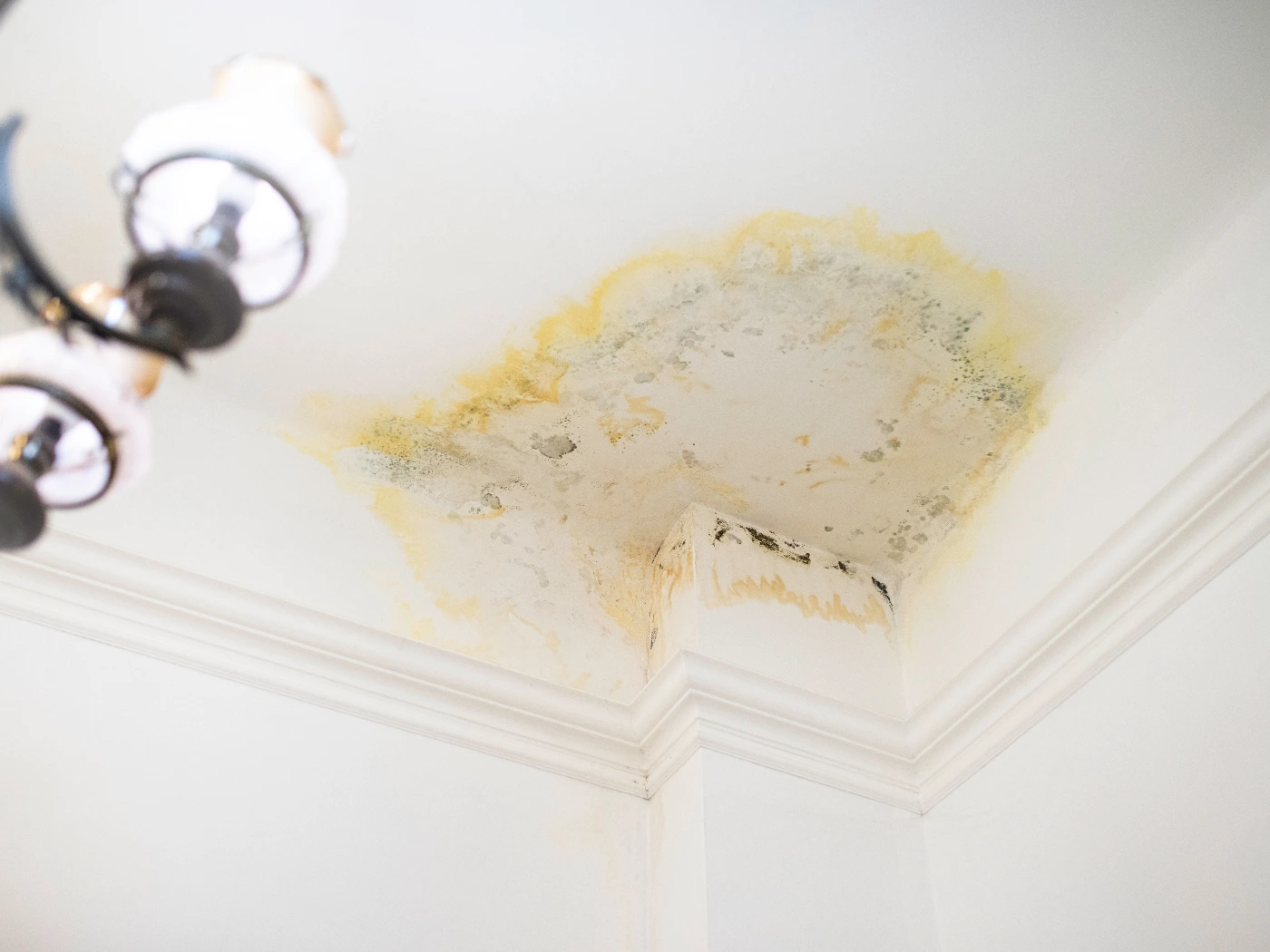
Quick answer: If water is coming through your ceiling, shut off the water source, turn off the lights in that room and keep out from under any sagging spot. A pro finds the leak, dries the ceiling and the space above it, and tells you what must be replaced. Call (720) 615-8346 any hour.
Water Stain or Sag in Your Ceiling? Start Here
Look, nobody likes looking up and seeing a brown stain. Maybe it is a drip. Maybe the paint is bubbling. Maybe the whole section is starting to sag.
Here is the thing about ceiling leak water damage in Boulder. What you see is rarely the whole story. Water spreads across the top of the drywall and soaks insulation above. The stain can be far from the source.
Now, you might be wondering what to do right now. Stay out from under it. Shut off the water if you know the source. Call (720) 615-8346. The line is answered day and night, and a local water extraction professional can be sent to your home.
Time matters. The EPA says mold can start growing in about 24 to 48 hours. For quick steps, see what to do after water damage.
What You Can Count On When You Call
Calls to this number are answered 24 hours a day, 7 days a week. That includes holidays and the day after a big storm.
We cover Boulder and nearby towns, including Gunbarrel, Louisville, Lafayette, Superior, Erie, Niwot, and Longmont. Arrival time varies by the hour, the weather, and how many calls are ahead of yours.
We will not throw around made up review counts or fake years in business. That drives us a little crazy in this industry. If a company claims hundreds of jobs, ask how they know.
Before work starts, ask three plain questions. Who carries the insurance? How is the price set? How will drying be checked? As far as we know, Colorado does not license water restoration as its own trade. So look for insurance and training such as IICRC certification.
A good pro explains the plan in simple words. If you leave a call confused, that is a warning sign.
Ceiling Water Damage Explained, Neighbor to Neighbor
Ceiling water damage repair has two parts. First, the leak is stopped. Then the wet drywall and insulation are dried or removed. Painting over a stain skips both steps, and the stain comes back.
Most customers ask us the same thing. Will a water damaged ceiling dry out on its own? Sometimes the surface dries. But wet insulation and framing above can stay damp for weeks.
What to do about a sagging ceiling
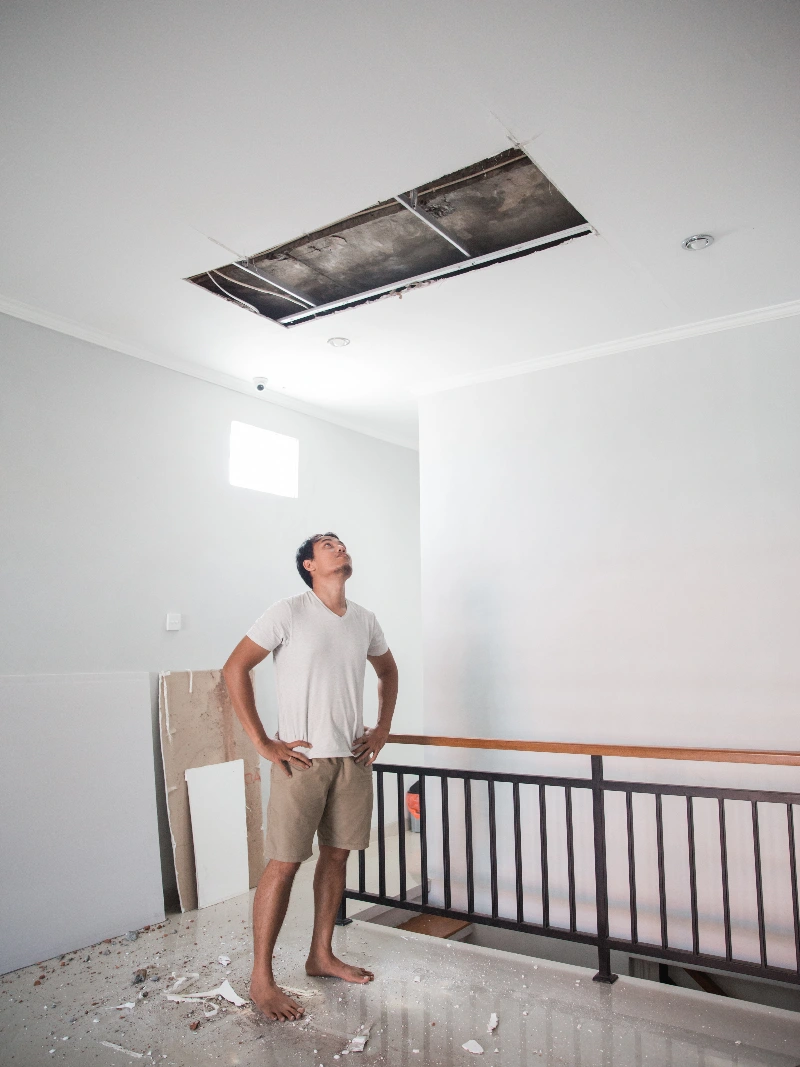
A sagging ceiling holds water. It can fall without warning. Keep people and pets out from under it. Do not poke it open on your own. Call for help.
Water damage in a ceiling from the roof
Roof leaks often show up after a storm or snowmelt. A plumber or roofer fixes the source. A cleanup crew dries the ceiling and attic space. You usually need both.
Leaks under an upstairs bathroom
This is one of the most common ones. A toilet, tub, or supply line leaks into the ceiling below. See toilet overflow cleanup and burst pipe water cleanup.
Some jobs are more complicated than they sound. A leak in one spot can wet three rooms. We cannot fix everything overnight, and honest crews say so.
First steps
Ceiling Leak Water Damage: What To Do First
Mistakes to Avoid With a Wet Ceiling
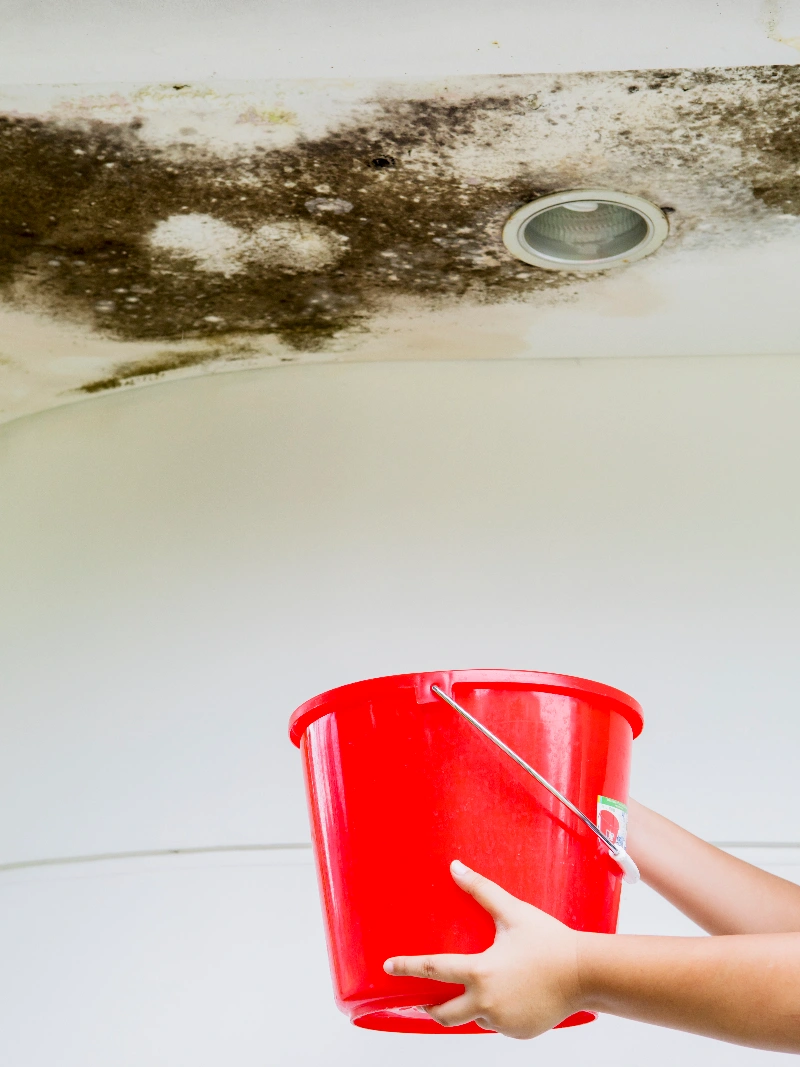
Here are the mistakes we see most. People paint over the stain. They ignore a small drip because it seems minor. They stand under a bulging spot to look at it.
Another one is turning on light fixtures under a wet ceiling. Water and electricity do not mix. If water is coming through a fixture, shut off power only if you can do it safely.
Also, do not assume the roof is the cause. It may be a pipe. A plumber can help find out.
Take photos before anything is moved. Your insurer will want them. See our insurance claim guide for what to keep.
Why it matters
Will a Water-Damaged Ceiling Dry Out?
Sometimes. The Gypsum Association says drywall can stay only if the source has been fixed, the water was clean, the board is still sound, and it can be dried thoroughly before mold begins, typically within 24 to 48 hours. EPA guidance is similar: wallboard may be dried in place if there is no obvious swelling and the seams are intact. Wet insulation above a ceiling holds water against the board, so wet ceiling drying often means opening a section to let air into the cavity. When there is doubt, the Gypsum Association’s own advice is to replace it.
Mold can start within
24 to 48 hours
Calls answered
24/7
How Ceiling Water Damage Repair Usually Goes
Usually the crew starts with safety and a look around. They confirm the water is off and the area is safe. It varies, but most jobs follow this order.
First comes finding the water. A moisture meter and thermal camera show how far it spread. Next, a sagging or soaked ceiling section may be opened or removed to release trapped water.
Then wet insulation is removed. Air movers and dehumidifiers dry the framing for several days. Readings are checked each day.
The last step is checking that everything is dry before repairs start. Drywall, texture, and paint come after that. Sometimes the plan changes mid job. That is normal. See our process page and structural drying page.
How it works
How Ceiling Water Damage Repair Services Work
Find the Source
A leak above a ceiling can come from a bathroom, a supply line, an appliance, the roof or an attic unit. Nothing is repaired until the source is found and stopped.
Moisture Mapping
A moisture meter shows how far the water spread across the ceiling and down the walls, which is usually farther than the stain.
Controlled Opening
Sagging or saturated drywall and wet insulation are cut out so trapped water can drain and the cavity can dry.
Drying
Air movers and dehumidifiers dry the joists, the floor above and the remaining drywall. Readings are taken until they are back to normal.
Repair and Paint
New drywall is hung, taped, textured and painted once everything is dry. Painting over a damp ceiling only traps the moisture inside.
Equipment Used for Wet Ceiling Drying
Equipment varies by company, so ask what will be brought to your home. Here is what a solid ceiling job typically uses.
Moisture meters and thermal imaging cameras find hidden wet spots. Air movers push dry air through opened areas. Dehumidifiers pull moisture from the air. Extractors help with water on the floor below.
Some crews add HEPA air scrubbers during demolition to filter dust.
None of this is magic. The tools only help if the crew checks readings each day and adjusts the setup. That daily check is what keeps a stain from coming back.
What Happens If a Wet Ceiling Sits
Mold is the big risk. It can start within 24 to 48 hours, according to the EPA. See mold after water damage for details.
Wet drywall softens and can fall. Wet insulation stops working and holds moisture. Wood framing can rot over time. Stains can spread.
Water above a ceiling can also reach wiring and light fixtures. That is a safety risk.
Money matters as well. Acting early usually keeps repairs smaller. National guides often show a few hundred to a few thousand dollars for drying and repair. Your price depends on the area, the water, and drying time. Our cost guide explains what changes the bill.
What to look for
Common Causes of Ceiling Water Damage in Boulder
One more point before anyone cuts. Textured ceiling finishes and joint compounds made before 1977 may contain asbestos, and Colorado’s health department notes that buildings of any age can have it. For a single-family home, the state’s trigger level is 32 square feet of material: above that, it must be inspected by a Colorado-certified asbestos building inspector before work starts. Ask the contractor how they handle this.
How to Judge a Ceiling Water Damage Repair Company
People often ask how to tell a good company from a bad one. Look for steady, honest answers instead of hype.
Ask for proof of insurance. Ask whether the price is an estimate or firm. Ask what moisture readings will be shared with you. Ask who will be on site and when.
Be careful with anyone who wants full payment first. Be careful with anyone who tears out half your home before checking readings. And be careful with anyone who will not put the scope in writing.
A good crew documents the water, the removed materials, and the final readings. That record helps with an insurance claim. Many policies cover sudden leaks, but not slow ones, so check yours.
Ceiling Leaks in Boulder: What Local Homeowners Should Know
Boulder sees heavy snow, fast thaws, and strong sun. That can cause ice dams and roof leaks in some homes. A warm afternoon followed by a hard freeze puts stress on roofs and pipes.
Many Boulder homes have second floor bathrooms and finished basements. Leaks from above can reach finished ceilings below. Older homes may also have older roofing and plumbing.
Hail is another local threat. Colorado’s Front Range gets hail storms, which can damage roofs. A roofer can check for damage after a storm.
If you plan major repairs, check with the City of Boulder Planning and Development Services about permits. If water reached a lower level, see flooded basement water extraction.
Why Call for Ceiling Water Damage Repair Here
You get one phone number and a real answer, day or night. You are not filling out forms and waiting for a callback.
The help is local, so travel time stays short across Boulder and nearby towns. The focus is on getting water out quickly, then drying until the readings say it is done.
You also get straight talk. If something can be dried in place, you hear that. If materials have to come out, you hear why. Real benefits are a faster response, a clear plan, and fewer surprises.
Need help right now? Call (720) 615-8346. For after hours calls, see emergency water removal.
Areas We Serve for Ceiling Water Damage Repair
Calls cover Boulder and nearby communities. Pick your area to learn more.
Central Boulder, North Boulder, South Boulder, East Boulder, and Gunbarrel.
Louisville, Lafayette, Superior, Erie, Niwot, and Longmont.
Travel limits depend on the hour and the weather. Closer areas are usually reached first. Ask for a time window when you call.
Ceiling Water Damage Repair FAQ in Boulder
Here are quick answers to the questions callers ask most.
What should I do about a water stain on my ceiling?
Find and stop the source. Stay out from under it. Take photos, then call (720) 615-8346.
Will a water damaged ceiling dry out on its own?
The surface may dry. Wet insulation and framing above can stay damp. Hidden moisture can lead to mold.
What do I do about a sagging ceiling?
Stay out from under it. Sagging drywall holds water and can fall. Call for help before opening it.
Can I paint over a water stain on a ceiling?
Not until the area is dry and the leak is fixed. Painting over a wet spot hides the problem.
How do I know if the leak is from the roof or a pipe?
Roof leaks often show up after rain or snow. Pipe leaks can happen any time. A roofer or plumber can check.
How long does ceiling water damage repair take?
Drying usually takes several days. Repairs and paint come after. It depends on how far the water spread.
How much does ceiling water damage repair cost?
It depends on the area, the water, and drying time. National guides often show a few hundred to a few thousand dollars. Ask for a written scope.
Does insurance cover ceiling water damage?
Many policies cover sudden leaks. Slow leaks and neglect are often excluded. Check your policy.
Can a wet ceiling cause mold?
Yes. Mold can start in about 24 to 48 hours, according to the EPA. Fast drying helps.
Who do I call for ceiling water damage in Boulder?
Call (720) 615-8346. The line is answered day and night. A plumber or roofer can fix the source.
Guides
Related Guides
Sources: FEMA and American Red Cross, Repairing Your Flooded Home. Gypsum Association, GA-231, Assessing Water Damage to Gypsum Board. U.S. EPA, mold remediation guide, Table 1. Colorado Department of Public Health and Environment, asbestos support and guidance. U.S. Consumer Product Safety Commission, Asbestos in the Home. Boulder County Public Health, mold. University of Minnesota Extension, ice dams.
Contact us