
How it works
Our Process: From Your Call to a Dry Home
After you call, a local pro checks safety, finds the source, removes standing water, dries the structure and proves it with moisture readings. Pumping often takes hours. Drying usually takes several days. Call (720) 615-8346 and get the water extraction process started, day or night.
Calls answered 24/7
Quick answer: A local pro checks safety, finds the source, removes standing water, dries the structure and proves it with moisture readings. Pumping often takes hours and drying usually takes several days. Call (720) 615-8346 to start.
The water extraction process has nine stages, from the first safety check to the final moisture reading. Pumping out standing water often takes a few hours. Drying the floors, walls and framing usually takes several days. This page walks through each stage so you know what to expect and what to ask. Water in your home right now? Call (720) 615-8346.
Talk to a local pro now. Open 24 hours a day.
Call (720) 615-8346- The process runs from safety check and inspection to extraction, drying, cleaning and final readings.
- Pumping often takes hours. Drying usually takes several days, longer in cold basements.
- Ask for a written scope and price before work starts.
- Moisture readings are the proof that the job is done. Ask to see them.
- Mold can begin in 24 to 48 hours, so speed matters.
The first ten minutes feel like a blur
You find water where it should not be. Maybe it is a soggy patch under the washing machine. Maybe it is an inch across the whole basement. Your mind races. Who do I call? What do I touch? Is this going to cost a fortune?
Take a breath. Almost everyone feels this way. The good news is that restoring a wet home follows a clear order, and the order is the same whether the leak is small or large. Once you know the steps, the whole thing feels less scary.
Here is what happens, in plain language, from your first call to a dry home.
What happens when you call
Call (720) 615-8346 any hour of the day. The line is open 24 hours a day, 7 days a week. Tell the pro four things. Where the water is, where it came from if you know, when it started, and how to reach you.
Photos help a lot. If it is safe, snap a few of the water, the source and any damaged items while you wait. Keep them for your insurer too.
The pro may also ask a few safety questions. Is the water near outlets or the electrical panel? Do you smell gas? Is the water clear, cloudy or from a toilet or sewer line? Your answers shape what equipment and protection the crew brings. If anyone is in danger, call 911 first.
The water extraction process, step by step
Every job is different, but most follow these nine stages.
- Safety check and shutoff. The crew makes sure the source has stopped and that power, gas and the structure are safe to work around. If a pipe is still leaking, the main valve gets closed.
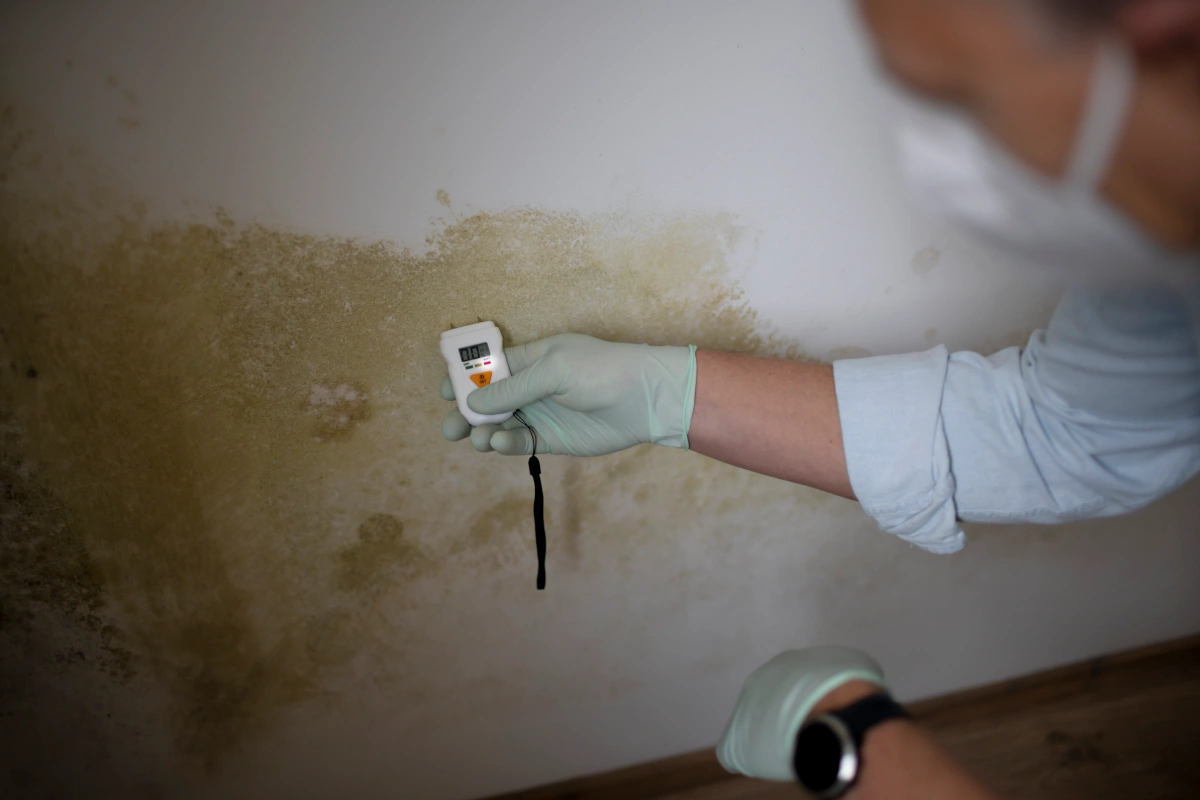
- Inspection and moisture mapping. The crew checks how far the water has spread. Moisture meters read walls, floors and ceilings. Some crews also use thermal cameras. This shows hidden wet spots you cannot see.
- Written scope and price. Before work starts, ask for what will be done and what it will cost, in writing. Ask what is mitigation and what is repair.
- Water extraction. Pumps remove deep water. Extractors pull the rest out of carpet, pad and hard floors. For most homes this takes hours, not days.
- Removing wet materials. Some items can dry in place. Others cannot, such as soaked carpet pad, wet insulation or the bottom of a saturated drywall wall. Ask what is coming out and why.
- Drying and monitoring. Air movers and dehumidifiers run for days. The crew returns to check moisture readings and moves equipment as needed.
- Cleaning and treatment. Surfaces are cleaned, and an antimicrobial may be used where the situation calls for it.
- Final readings. The crew confirms that materials are back to normal moisture levels. Ask to see the numbers.
- Repairs. New drywall, flooring, paint and trim come last, once the structure is dry.
Talk to a local pro now. Open 24 hours a day.
Call (720) 615-8346The process at a glance
This table shows typical timing. Real jobs vary with the size of the loss, the type of water and the weather.
| Stage | What happens | Typical time | What to ask |
|---|---|---|---|
| Safety check | Source stopped, hazards checked | Minutes to an hour | Is it safe to be in the area? |
| Inspection | Moisture meters map the damage | An hour or two | Can I see the readings? |
| Scope and price | Written plan of the work | Same visit | What is included and what is not? |
| Extraction | Pumps and extractors remove water | Hours | Is all standing water gone? |
| Wet materials | Items that cannot dry are removed | Hours to a day | What is coming out and why? |
| Drying | Air movers and dehumidifiers run | Often 3 to 5 days, sometimes longer | How often will you check readings? |
| Cleaning | Surfaces cleaned and treated | Hours | What products are used? |
| Final readings | Moisture confirmed back to normal | Same visit | Can I keep a copy? |
| Repairs | Rebuild and finish work | Days to weeks | Is this in the same price? |
These ranges are general, not a promise. Drying in a cold Boulder basement can take longer than in a warm room upstairs.
Why the first 24 to 48 hours matter
Water keeps moving after the leak stops. It soaks into carpet pad, runs under baseboards and wicks up drywall. A room can look fine while the walls are still wet inside. That is why fast emergency water removal in Boulder matters.
The EPA advises drying wet materials within 24 to 48 hours to help prevent mold. After that window, a drying job can turn into a removal job. See our guide to mold after water damage for the warning signs.
Water category matters too. The IICRC sorts water into clean, gray and black. Clean water can get worse as it sits. Sewage is contaminated from the start and needs protective gear and careful disposal. Learn more about sewage backup cleanup.
What you can do while you wait
Some steps are safe, and some are not. Here is a short list.
- Stay out of standing water if it might reach outlets or cords.
- Shut off the main water valve if a pipe is leaking.
- Move small furniture, rugs and electronics to a dry room.
- Take photos and video of the damage.
- Open your insurance claim if you plan to use it.
- Do not use a household vacuum on water.
- Do not tear out walls or flooring before photos are taken.
For a full checklist, read our guide on what to do after water damage.
How to check the pro you hire
You do not need to be an expert. A few firm questions go a long way.
- Ask for proof of liability insurance and check that it is current.
- Ask about IICRC training and what it covers.
- As far as we know, Colorado has no state license just for water mitigation. Plumbers and electricians are licensed, so check those if they are involved.
- Get the scope and price in writing before work starts.
- Ask to see moisture readings at the start and end.
- Be careful with anyone who wants full payment up front or pressures you to sign right away.
You will not find made up reviews on this page. Ask any pro for references you can verify yourself.
Insurance and paperwork
If you plan to file a claim, paperwork matters. Keep these on hand.
- Photos and video of the damage before cleanup
- The written scope and price
- What was removed, with notes on why
- Moisture readings taken during drying
- Receipts for emergency costs
Your insurer decides what is covered. Read your policy and ask your agent. Our insurance claim guide explains how claims usually work in Colorado. For price ranges, see the water extraction cost guide.
Boulder conditions that shape the process
Boulder County adds a few twists. Freeze and thaw cycles split pipes in unheated spaces. Spring snowmelt pushes water toward foundations. Many older homes have finished basements, where carpet, drywall and storage soak up water fast.
Colorado air is dry, which helps. Cold basements slow evaporation, though, so drying equipment may run longer. Homes near Boulder Creek sit closer to flood risk, as the September 2013 flood showed. Larger repairs can involve permits from your city or county building office.
Gas and electric problems go to your utility, such as Xcel Energy. Sewer issues go to your city or town utility. Find their numbers on your bill or website. The same process applies in Boulder, Louisville, Lafayette and Longmont.
When to call right now
Call as soon as you see any of these.
- Water is still coming in, or you cannot find the shutoff.
- Carpet, drywall or wood floors are soaked.
- The water came from a toilet, sewer line or outside flooding.
- More than a day has passed and things still feel damp.
- You smell something musty.
Open 24 hours a day, 7 days a week.
Call (720) 615-8346How the water extraction process works: your questions
What is the water extraction process?
It starts with a safety check and inspection, then water removal, removal of wet materials, drying with monitoring, cleaning and final moisture readings. Repairs come last.
How long does the whole process take?
Pumping standing water often takes a few hours. Drying usually takes several days. Repairs, if needed, start once readings show the structure is dry.
What happens when I call?
You describe where the water is, where it came from, when it started and how to reach you. Photos help. If anyone is in danger, call 911 first.
Do I need to be home during the work?
Usually someone should be there for the first visit to show the damage and approve the scope. Ask the pro what they need after that.
How do I know the home is truly dry?
Moisture readings. A pro should measure materials at the start and end and share the numbers. A dry surface alone proves nothing.
What equipment is used?
Typically pumps, extractors, air movers, dehumidifiers and moisture meters. Some crews add thermal cameras. Exact gear depends on the job.
Can I stay in my home during drying?
Often yes for clean water. Equipment is loud and uses power. Sewage or heavy contamination is different. Ask the pro, and ask a doctor if anyone is ill.
Will insurance cover the process?
It depends on the cause and your policy. Sudden pipe bursts are often covered. Floods and sewer backup usually need extra coverage. Read our claim guide.
Can renters call too?
Yes. Renters and business owners can call. It helps to tell your landlord first, since repairs to the building are usually theirs to approve.
Can I start drying before the pro arrives?
Yes, with care. Stop the source, remove clean standing water if safe, and move belongings. Do not touch electrical gear in water or handle sewage.
Sources: The U.S. Environmental Protection Agency (A Brief Guide to Mold, Moisture, and Your Home), the IICRC S500 water damage standard, and the City of Boulder and Boulder County flood information pages.
This page gives general information, not professional advice. For safety, electrical, gas or health questions, contact the right professional. Read your own policy and ask your insurer.
Guides
Related Guides
Source: U.S. EPA, A Brief Guide to Mold, Moisture and Your Home.